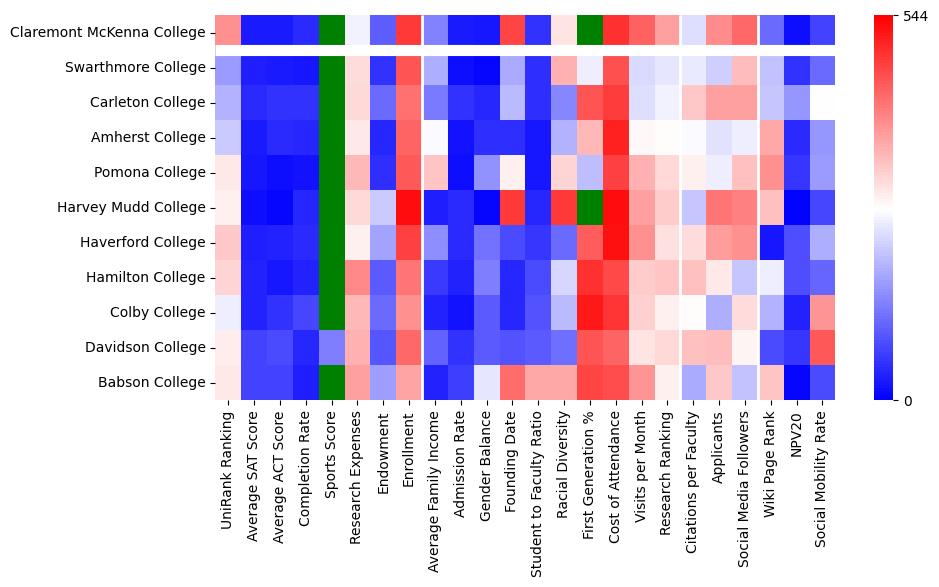
Claremont McKenna College (CMC), established in 1946, is a prestigious liberal arts college situated in Claremont, California. As part of the Claremont Colleges consortium, CMC offers its students access to a shared campus with six other institutions, providing a unique blend of small college benefits and large university resources. Originally founded as Claremont Men’s College, it transitioned to a coeducational institution in 1976, adopting its current name. Known for its focus on leadership and economics, CMC has cultivated a reputation for producing graduates who excel in public affairs and business.
What sets Claremont McKenna College apart is its commitment to producing well-rounded leaders who are equipped to tackle real-world challenges. The college emphasizes experiential learning, offering students abundant opportunities for internships, research projects, and community engagement. One of CMC's standout features is the Marian Miner Cook Athenaeum, which hosts renowned speakers and provides a forum for intellectual discourse. The college's intimate setting, with an undergraduate enrollment of just over 1,300 students, fosters a close-knit community where students can engage directly with faculty and peers.
Academically, Claremont McKenna College is highly regarded, consistently ranking among the top liberal arts colleges in the United States. The college offers a broad curriculum with strengths in economics, government, and international relations. Notably, the Robert Day School of Economics and Finance provides a rigorous program that integrates economics with finance and accounting, preparing students for successful careers in business and public policy. The college's focus on interdisciplinary learning is evident in programs like the Philosophy, Politics, and Economics (PPE) major, which allows students to explore complex global issues through multiple lenses.
Despite its many strengths, Claremont McKenna College is not without its challenges. The competitive atmosphere can sometimes be intense, with students often feeling pressure to excel in both academics and extracurricular activities. Additionally, while the small size fosters community, it can also limit social options and diversity of courses compared to larger universities. The college has been working to address issues of diversity and inclusion, striving to create a more welcoming environment for students from all backgrounds. However, these efforts are ongoing, and the college continues to seek ways to enhance the overall student experience.